
Minneapolis Train Accident Lawyers
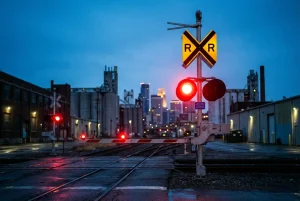
Train accidents are among the most catastrophic events on Minneapolis transit lines and freight corridors. Whether involving a massive BNSF freight locomotive, a Northstar commuter train, or the METRO Blue and Green light rail lines, these collisions often result in life-altering injuries. The sheer mass and velocity of a train mean that even a low-speed impact can be fatal to pedestrians and motorists.
Navigating the legal aftermath of a rail disaster is far more complex than a standard car crash. If you or a loved one has been hurt, you need a Minneapolis personal injury lawyer with the experience to take on multi-billion-dollar railroad corporations. At 612-Injured, we understand the federal regulations and local safety statutes that govern these giants. Our mission at 612-Injured is to ensure you receive the maximum compensation for your recovery.
The Complexity of Train Accident Litigation in the Twin Cities
Unlike other personal injury claims, train accidents fall under a unique intersection of state law and federal oversight. Most major railroads are governed by the Federal Railroad Administration (FRA), and many claims are subject to “preemption,” a legal doctrine that can limit a victim’s ability to sue under state law for things like excessive speed if the train was within federal limits. However, 612-Injured knows how to identify the gaps in these protections to find the negligence that caused your harm.
We handle a wide spectrum of Minneapolis rail incidents, including:
- Light Rail Collisions: Incidents involving METRO trains and vehicles or pedestrians in high-density urban areas.
- Freight Derailments: Accidents caused by faulty track maintenance, shifting cargo, or mechanical failure.
- Passenger Rail Injuries: Sudden stops, derailments, or platform accidents involving Amtrak or Northstar lines.
- FELA Claims: Specialized legal representation for railroad workers injured on the job.
Modern Safety Standards: The Impact of the 2026 Railway Safety Act
The landscape of rail safety changed significantly with the Railway Safety Act of 2026. This federal legislation was passed to increase accountability for large rail carriers following a series of high-profile derailments. The Act now mandates more frequent inspections, higher fines for safety violations, and the implementation of advanced defect-detection technology on tracks throughout Minneapolis and the surrounding suburbs.
If a railroad company bypassed these 2026 safety protocols to save on costs, 612-Injured will use that evidence to build a powerful case against them. We leverage black box data, maintenance logs, and dispatch recordings to prove exactly where the system failed you.
Common Causes of Negligent Train Crashes
While railroad companies often try to blame motorists or pedestrians, our investigations frequently reveal systemic negligence. Common causes of train accidents in Minneapolis include:
- Operator Error: Fatigue, distracted operation, or failure to follow speed restrictions.
- Inadequate Warnings: Failure to sound the horn or whistle when approaching public crossings.
- Track Defects: Rusted rails, broken ties, or poorly maintained switches that lead to derailments.
- Mechanical Failures: Brake malfunctions or engine defects that prevent the train from responding to hazards.
- Signal Malfunctions: Failure of automated gates or flashing lights at railroad-highway grade crossings.
612-Injured works with top-tier rail safety experts to reconstruct the accident scene. We leave no stone unturned when it comes to identifying who is truly at fault for your medical bills and emotional suffering.
Frequently Asked Questions About Train Accidents in Minneapolis
What makes a train accident different from a car accident?
Trains are considered “common carriers,” meaning they have a heightened legal duty to protect their passengers and the public. Additionally, claims involving public transit like the METRO lines often involve government entities, which requires a much shorter notification period—sometimes as little as 180 days—to file a notice of claim.
Can I sue for a train accident if I was a passenger?
Yes. As a passenger, you are rarely at fault for the accident. Whether the injury was caused by a derailment, a collision, or a violent sudden stop, you have a right to pursue compensation from the rail operator or the entity responsible for track maintenance.
What is FELA, and does 612-Injured handle these cases?
FELA stands for the Federal Employers’ Liability Act
What types of compensation can I recover?
We fight for a comprehensive recovery that includes all current and future medical expenses, lost wages for time away from work, and loss of future earning potential. We also pursue significant damages for non-economic losses, such as physical pain, permanent disfigurement, and emotional trauma.
Why Choose 612-Injured to Handle Your Rail Claim?
Railroad companies deploy their own teams of adjusters and investigators to a crash site within minutes. Their goal is simple: minimize their financial liability. You need an advocate who can get to the site just as fast. 612-Injured has been fighting for the rights of injured Minneapolis residents for over three decades, and we have the resources to go toe-to-toe with Class I railroads.
We work on a contingency fee basis, meaning we only get paid if we win your case. You don’t have to worry about upfront costs or hourly fees during what is already an incredibly stressful time. We take the legal weight off your shoulders so you can focus on healing.
Schedule Your Free Minneapolis Train Accident Consultation
If you or a loved one has been injured in a train crash, light rail incident, or derailment in Minneapolis, time is your enemy. Evidence can be cleared, and data can be overwritten. Contact 612-Injured today to protect your rights and ensure your story is told.
Call us today at (612) 463-2476 or complete the contact form below to schedule your free consultation to get started. Let us provide the aggressive representation you need to hold the rail giants accountable and secure the compensation you deserve.